Philosophy

Monday, November 7, 2016

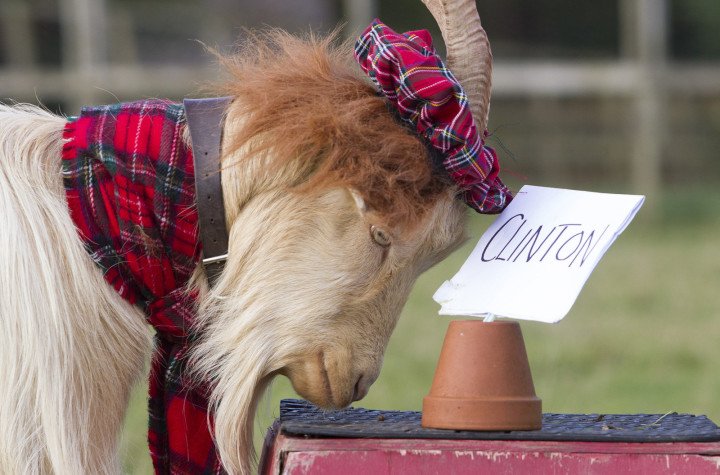
This “Psychic” Scottish Goat Has Predicted Hillary Clinton Will Win The Election

Psychic goat picks Clinton for president

Weird Earlier today
This well-dressed fortune teller isn't kidding around.


Photo via @BuzzFeed


but a psychic goat predicted a hillary win and honestly, as a species, goats seem more versed in the arts of divination to me


Thursday, November 3, 2016

Bison of Borth America


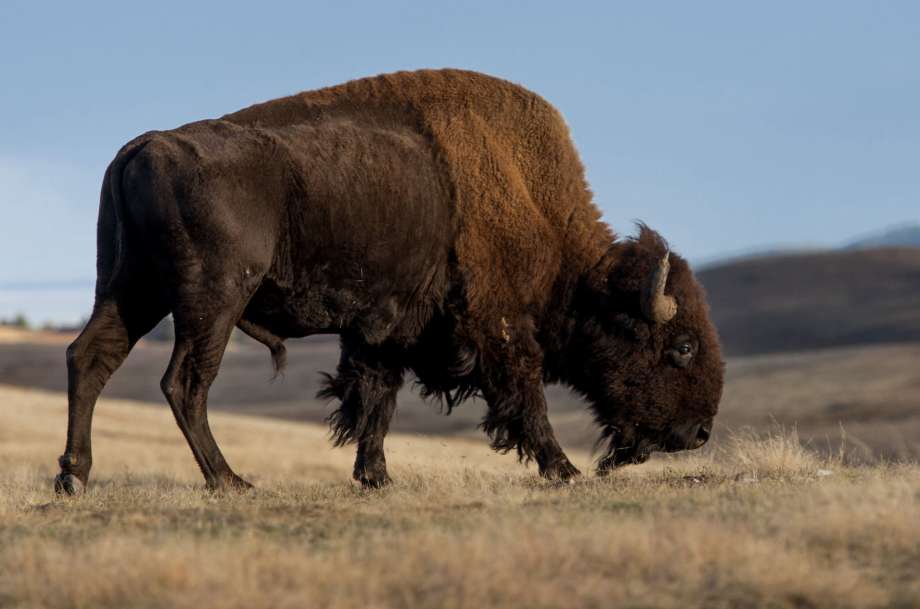
American bison designated as US's national mammal


The Fighting Goats of Poznań


Poznań, Poland

The Fighting Goats of Poznań

These mechanical goats have been battling it out for 465 years, all because of an overcooked deer.

A midday walk through the colorful market square of Poznań in central Poland means vibrantly painted buildings, bustling cafes, food stalls and vendors—and throngs of locals and tourists jostling for the best spot to watch a 465-year-old fight. It just happens to be between a couple of mechanical goats.

At the heart of the square is Poznań’s Town Hall, topped by three turrets with a clock tower in the middle. As the time inches towards noon the assembled crowd waits for the bell to toll, craning their necks to watch two iron billy goats glide out and face each other. As they have done since the year 1551, the goats butt heads twelve times to strike the midday hour.

It’s a lovely tradition, with an unexpected origin story.

Back in the middle of the 16th century there was a chef in town (some versions call him “Pete”) who was charged with cooking an elaborate feast for the mayor and some visiting dignitaries.  Pete set about preparing some roast deer, but things didn’t go so well. Distracted by the festivities of the big event, his beautiful joint of venison ended up falling off the spit, straight into the fire, burning to a crisp.

Pete needed some new meat, but the butcher had no more venison. In a desperate move to save the meal (and his own neck) he grabbed two grazing goats from a nearby meadow, but they escaped his grasp and darted off towards Town Hall. They ran up the stairs into the tower, catching the attention of the crowd below when they emerged from the turret, locked horns and began to battle it out. The crowd included the mayor and his guests, who were more charmed than they were angry about the meal, so Pete and the goats were pardoned.

A new clock was in the works for the Town Hall, so the mayor ordered that two goats be added to the mechanism, cuckoo clock style. They’ve been taking noonday center stage ever since. Luckily for the crowds down below it’s always a draw, so they’ll be back again tomorrow to fight another day.

 
Poznań is in west-central Poland, about 100 miles east of the German border and 185 miles west of Warsaw. The goats emerge to fight every day at noon in front of the entrance to the Town Hall. There is also a live trumpet call just before the hour strikes, a good reminder to stop and look up.


A pair of retired goats on display


Source  http://www.atlasobscura.com/places/the-fighting-goats-of-poznan


Sunday, October 30, 2016

Barbary Sheep

Image result for barbary sheep

The Barbary sheep has the distinction of being the only wild sheep species in Africa (4), and the only species in the genus Ammotragus (5). In appearance, it is somewhat of an intermediate between a sheep and a goat. It is a stocky, heavily built animal, with short legs and a rather long face (2). The coat, which is generally a sandy-brown colour (4), is woolly during the winter, but moults to a finer, sleek coat for the hot summer months (2). Both sexes have horns that sweep backwards and outwards in an arch; those of the male are much thicker, longer and more heavily ridged than the more slender horns of the female (2). Males also differ from females by their significantly heavier weight, (up to twice that of females) (2), and the notably longer curtain of hair that hangs from the throat, chest and upper part of the forelegs (2) (5). On males, this mane of long, soft hairs almost touches the ground (2) (5). The short tail, which is hairless on the underside, has scent glands (2).


 Link: https://en.wikipedia.org/wiki/Barbary_sheep


Barbary Sheep

Image result for barbary sheep
 

The Barbary sheep has the distinction of being the only wild sheep species in Africa (4), and the only species in the genus Ammotragus (5). In appearance, it is somewhat of an intermediate between a sheep and a goat. It is a stocky, heavily built animal, with short legs and a rather long face (2). The coat, which is generally a sandy-brown colour (4), is woolly during the winter, but moults to a finer, sleek coat for the hot summer months (2). Both sexes have horns that sweep backwards and outwards in an arch; those of the male are much thicker, longer and more heavily ridged than the more slender horns of the female (2). Males also differ from females by their significantly heavier weight, (up to twice that of females) (2), and the notably longer curtain of hair that hangs from the throat, chest and upper part of the forelegs (2) (5). On males, this mane of long, soft hairs almost touches the ground (2) (5). The short tail, which is hairless on the underside, has scent glands (2).

Barbary Sheep

The Barbary sheep has the distinction of being the only wild sheep species in Africa, and the only species in the genus Ammotragus. In appearance, it is somewhat of an intermediate between a sheep and a goat. It is a stocky, heavily built animal, with short legs and a rather long face. The coat, which is generally a sandy-brown colour, is woolly during the winter, but moults to a finer, sleek coat for the hot summer months. Both sexes have horns that sweep backwards and outwards in an arch; those of the male are much thicker, longer and more heavily ...

 Barbary sheep are found in arid mountainous areas where they graz and browse grasses, bushes, and lichens. They are able to obtain all their moisture from food, but if liquid water is available, they drink it and wallow in it. Barbary sheep are crepuscular: active in the early morning and late afternoon and resting in the heat of the day. They are very agile and can achieve a standing jump of over 2 metres (7 ft). Barbary sheep flee at the first sign of danger.They are well adapted to their habitats which consist of steep rocky mountains and canyons. When threatened, they always run up and bounce back and forth over the tops of the mountains to elude predators below. They stay in rough, steep country because they are more suited to the terrain than any of their predators. Aoudad are extremely nomadic and travel constantly via mountain ranges. Their main predators in North Africa were the Barbary leopard, the Barbary lion, and caracal, but nowadays only humans threaten their populations.

 Image result for barbary sheep


Ram Screaming like a Human


Barbary Sheep

 Image result for barbary sheep


Description

The Barbary sheep has the distinction of being the only wild sheep species in Africa (4), and the only species in the genus Ammotragus (5). In appearance, it is somewhat of an intermediate between a sheep and a goat. It is a stocky, heavily built animal, with short legs and a rather long face (2). The coat, which is generally a sandy-brown colour (4), is woolly during the winter, but moults to a finer, sleek coat for the hot summer months (2). Both sexes have horns that sweep backwards and outwards in an arch; those of the male are much thicker, longer and more heavily ...


Link: http://www.arkive.org/barbary-sheep/ammotragus-lervia/