Goats on a Wall

What is acceptable risk?

Philosophy

Sunday, October 30, 2016

Barbary Sheep

Image result for barbary sheep

The Barbary sheep has the distinction of being the only wild sheep species in Africa (4), and the only species in the genus Ammotragus (5). In appearance, it is somewhat of an intermediate between a sheep and a goat. It is a stocky, heavily built animal, with short legs and a rather long face (2). The coat, which is generally a sandy-brown colour (4), is woolly during the winter, but moults to a finer, sleek coat for the hot summer months (2). Both sexes have horns that sweep backwards and outwards in an arch; those of the male are much thicker, longer and more heavily ridged than the more slender horns of the female (2). Males also differ from females by their significantly heavier weight, (up to twice that of females) (2), and the notably longer curtain of hair that hangs from the throat, chest and upper part of the forelegs (2) (5). On males, this mane of long, soft hairs almost touches the ground (2) (5). The short tail, which is hairless on the underside, has scent glands (2).


 Link: https://en.wikipedia.org/wiki/Barbary_sheep


Posted by Robert Lewis and Jennifer Hodson at 11:19 PM No comments:
Email ThisBlogThis!Share to XShare to FacebookShare to Pinterest

Barbary Sheep

Image result for barbary sheep
 

The Barbary sheep has the distinction of being the only wild sheep species in Africa (4), and the only species in the genus Ammotragus (5). In appearance, it is somewhat of an intermediate between a sheep and a goat. It is a stocky, heavily built animal, with short legs and a rather long face (2). The coat, which is generally a sandy-brown colour (4), is woolly during the winter, but moults to a finer, sleek coat for the hot summer months (2). Both sexes have horns that sweep backwards and outwards in an arch; those of the male are much thicker, longer and more heavily ridged than the more slender horns of the female (2). Males also differ from females by their significantly heavier weight, (up to twice that of females) (2), and the notably longer curtain of hair that hangs from the throat, chest and upper part of the forelegs (2) (5). On males, this mane of long, soft hairs almost touches the ground (2) (5). The short tail, which is hairless on the underside, has scent glands (2).
Posted by Robert Lewis and Jennifer Hodson at 11:19 PM No comments:
Email ThisBlogThis!Share to XShare to FacebookShare to Pinterest

Barbary Sheep

The Barbary sheep has the distinction of being the only wild sheep species in Africa, and the only species in the genus Ammotragus. In appearance, it is somewhat of an intermediate between a sheep and a goat. It is a stocky, heavily built animal, with short legs and a rather long face. The coat, which is generally a sandy-brown colour, is woolly during the winter, but moults to a finer, sleek coat for the hot summer months. Both sexes have horns that sweep backwards and outwards in an arch; those of the male are much thicker, longer and more heavily ...

 Barbary sheep are found in arid mountainous areas where they graz and browse grasses, bushes, and lichens. They are able to obtain all their moisture from food, but if liquid water is available, they drink it and wallow in it. Barbary sheep are crepuscular: active in the early morning and late afternoon and resting in the heat of the day. They are very agile and can achieve a standing jump of over 2 metres (7 ft). Barbary sheep flee at the first sign of danger.They are well adapted to their habitats which consist of steep rocky mountains and canyons. When threatened, they always run up and bounce back and forth over the tops of the mountains to elude predators below. They stay in rough, steep country because they are more suited to the terrain than any of their predators. Aoudad are extremely nomadic and travel constantly via mountain ranges. Their main predators in North Africa were the Barbary leopard, the Barbary lion, and caracal, but nowadays only humans threaten their populations.

 Image result for barbary sheep


Posted by Robert Lewis and Jennifer Hodson at 4:44 PM 2 comments:
Email ThisBlogThis!Share to XShare to FacebookShare to Pinterest

Ram Screaming like a Human


Barbary Sheep

 Image result for barbary sheep


Description

The Barbary sheep has the distinction of being the only wild sheep species in Africa (4), and the only species in the genus Ammotragus (5). In appearance, it is somewhat of an intermediate between a sheep and a goat. It is a stocky, heavily built animal, with short legs and a rather long face (2). The coat, which is generally a sandy-brown colour (4), is woolly during the winter, but moults to a finer, sleek coat for the hot summer months (2). Both sexes have horns that sweep backwards and outwards in an arch; those of the male are much thicker, longer and more heavily ...
  • Image credit
  • Link to this image
  • Add to scrapbook

  • How you can use this image


Link: http://www.arkive.org/barbary-sheep/ammotragus-lervia/


Posted by Robert Lewis and Jennifer Hodson at 4:44 PM No comments:
Email ThisBlogThis!Share to XShare to FacebookShare to Pinterest

Sunday, September 25, 2016

Balancing Rock, Tamil Nadu

top 5 natural wonders in india- India Tv 

 
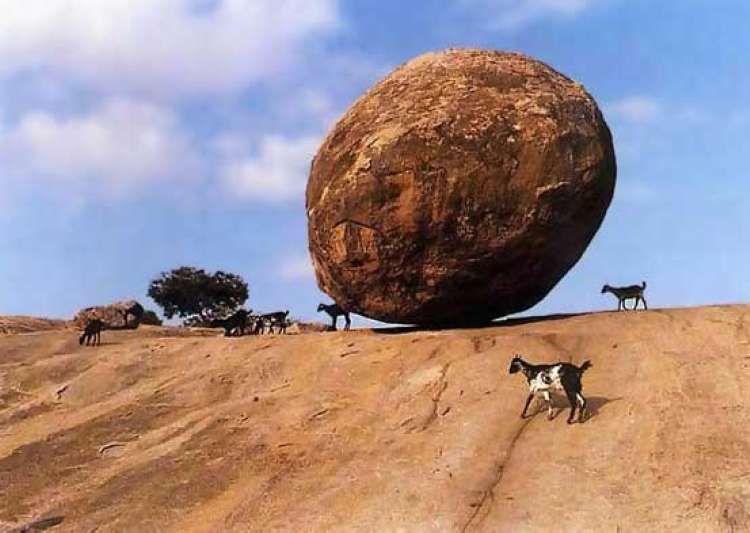
Balancing Rock is 60 km from Chennai in Mahabalipuram. Often referred to as Krishna's Butter Ball, it is a huge boulder resting on a narrow rock base.

The rock is so precariously perched on a small surface area that as one TripAdvisor travellers says, "You almost don't want to stand in front of it." This is an excellent place for all the shutterbugs.

 krishnas-butterball-10
 A massive stone, popularly known as the Krishna's Butter Ball, has balanced itself precariously at the slippery edge of a hill for ages. Looking at it, one wonders as to how come a 20-feet-high, 5-metre-wide and 250-ton stone stood the test of time to remain stuck at that place for so many years. Apart from attracting travellers, the rock also serves as a shade for animals who want to stay away from the sun for a while.

Balancing Rock at Mahabalipuram

Located in the Mahabalipuram town of Tamil Nadu, the balancing rock is originally known as Krishna's Butterball which is serves as a one of the major centre of tourist attractions in the town.
The “butterball” is actually a giant balancing rock which is 5 meters in diameter, is perched on a smooth slope, seemingly defying all laws of physics.

There is a round rocky huge ball that is miraculously balanced in place at an angle of 45 degrees.


Posted by Robert Lewis and Jennifer Hodson at 5:12 PM No comments:
Email ThisBlogThis!Share to XShare to FacebookShare to Pinterest

Wednesday, September 14, 2016

Goats with a tale to tell


Wildlife
Country diary

Four billy goats with a tale to tell


Coignafearn, Highlands There is something about wild goats that appeals to me – perhaps their look of superiority?

 
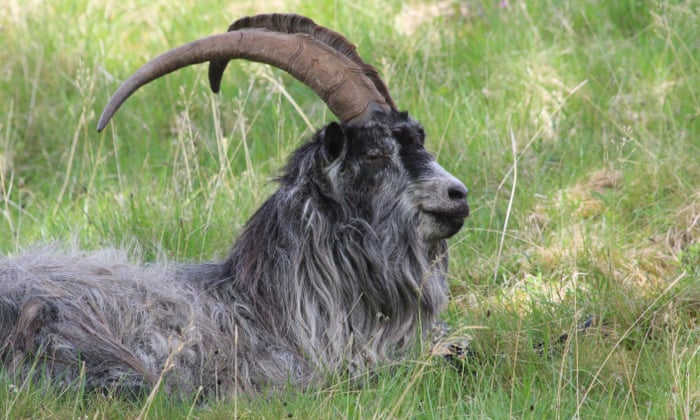
A wild billy goat sitting down in the shade of a birch. Photograph: Ray Collier 
Ray Collier

Saturday 25 June 2016 05.30 BST Last modified on Saturday 25 June 2016 05.31 BST
Standing on the side of the burn, I watched the water flow past my feet, gurgling and murmuring as it continued on its way to the river Findhorn below. After the cold spring, the spring and early summer plants were all flowering together. The yellow carpets of bird’s foot-trefoil, or “eggs and bacon” as I prefer to call it, dominated the scene. On the drier areas were small groups of mountain pansies whose flowers varied from red to intense violet.

The butterworts in the splash zone of the burn were such an outstanding purple that their tiny flowers looked much larger than they actually were. Lady’s smock plants – also known as cuckooflowers, because they bloom when the first cuckoo begins calling – stood out above the others. Their slender stems topped with tiny pale lilac flower heads looked as if they were just waiting for an orange tip butterfly to lay its tiny orange eggs on them.


Eye to hypnotic eye with a one-horned nanny

Large tracts of junipers, blue-green in the strong sunshine, have spread up the hillsides, making them impenetrable in places. On the scalloped margins, browsing by red deer on the outer shoots has formed unusual shapes, like topiary. Junipers are among my favourite shrubs, although, as they stand up to two metres high, perhaps “trees” would be a better word. 

Coignafearn is a strath favoured by golden eagles and peregrines as a hunting area, but even with binoculars I could not spot any of these raptors. However, as I was scanning the open hillsides I did have a strong feeling that I was being watched. Eventually I spotted them. Four large, dark, wild billy goats, sitting down in the shade of a solitary birch tree, all panting in the heat.

There is something about wild goats that appeals to me – perhaps their look of superiority? All four billies had huge, gracefully curved horns, and I counted the annual growth rings on one. He was between eight and nine years old. What stories he could tell of his tribe in that strath. I nodded my head in respect and left.


Follow Country diary on Twitter: @gdncountrydiary

Topics
Wildlife
Summer
Rural affairs
Plants
Scotland

https://www.theguardian.com/environment/2016/jun/25/four-wild-billy-goats-highlands-scotland-country-diary#img-1


Posted by Robert Lewis and Jennifer Hodson at 8:51 PM No comments:
Email ThisBlogThis!Share to XShare to FacebookShare to Pinterest

Old Goats

Research Councils UK ‏@research_uk 6m6 minutes ago
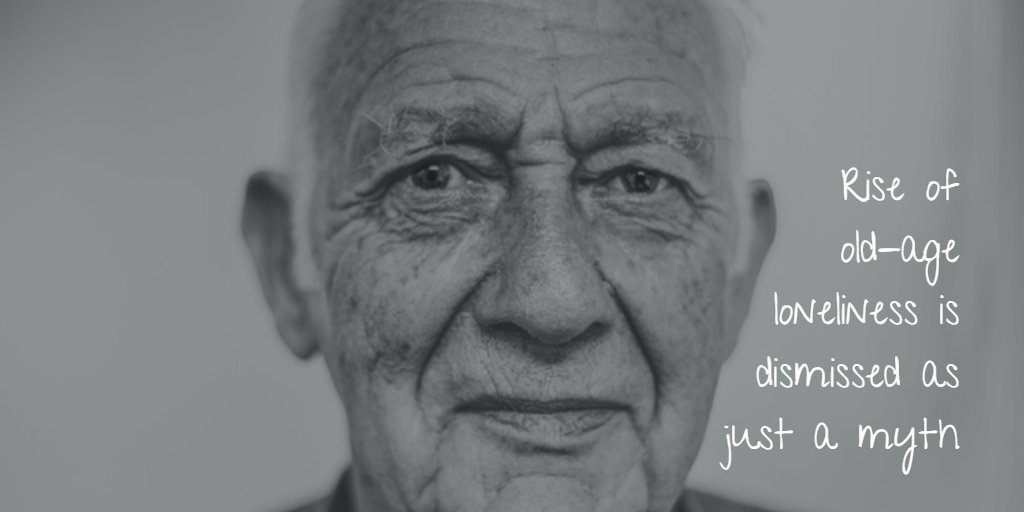
.@thetimes: 'Rise of old-age loneliness is dismissed as just a myth' in @ESRC-funded study http://ow.ly/A9aP302lbdn 
 
Posted by Robert Lewis and Jennifer Hodson at 8:43 PM No comments:
Email ThisBlogThis!Share to XShare to FacebookShare to Pinterest
Newer Posts Older Posts Home
View mobile version
Subscribe to: Posts (Atom)

Wikipedia

Search results

Twitter

Follow @jackedawes

Canadian Blog

Canadian Blog

Philosophy

Animal Rights


“The greatness of a nation and its moral progress can be judged by the way its animals are treated”

- Mahatma Gandhi


Vegetarian Ideal

Nothing will benefit human health and increase the chances for survival of life on Earth as much as the evolution to a vegetarian diet. - Albert Einstein

Small acts, when multiplied by millions of people, can transform the world. - Howard Zinn

Total Pageviews

This is a Blog About Risk

Nearly all endeavors have known and unknown risks. What are the acceptable risks going into any situation? Mountain goats are born to climb but even they have the occasional slip-up.

Followers

Disclaimer


My Blogs have been used as a second hard drive, in case of crashes in equipment. Google is a safe place to store information collected while surfing the WWW. If any content does not seem to adhere to Creative Commons Rules and you want it removed, please contact me to have it removed from the blog. Everything is true to the best of my knowledge.

Thanks, for visiting this blog.


My Blog List

  • GET A LIFE NOW
  • Positive Psychology
  • Monkeys and Dogs
  • My Fawlty Wiring
  • Choose Your Poison
  • My Mind Is Like A Circus
  • My Multiple Sclerosis
  • Goats on a Wall
  • The Mindful Gorilla
  • Read A Restless Mind
  • Mean World meditations
  • Mean Magpie Moments
  • The Addiction Labyrinth
  • White Crane Haiku
  • Discarded People
  • Bob One More
  • Life Unfolds in Moments
  • The Sustainability Mantra
  • Money, Magic and Unrequited Love
Show 10 Show All

Blog Archive

  • ▼  2025 (2)
    • ▼  March (2)
      • Gravity? Just a Joke for These Goats!
      • This is Why Goats Climb to 13,000 ft.
  • ►  2023 (1)
    • ►  March (1)
  • ►  2022 (3)
    • ►  September (1)
    • ►  June (1)
    • ►  March (1)
  • ►  2021 (6)
    • ►  April (3)
    • ►  February (1)
    • ►  January (2)
  • ►  2020 (2)
    • ►  December (1)
    • ►  February (1)
  • ►  2019 (3)
    • ►  September (2)
    • ►  May (1)
  • ►  2018 (14)
    • ►  August (2)
    • ►  July (3)
    • ►  June (2)
    • ►  May (6)
    • ►  February (1)
  • ►  2017 (17)
    • ►  July (1)
    • ►  June (1)
    • ►  May (1)
    • ►  March (4)
    • ►  January (10)
  • ►  2016 (33)
    • ►  December (4)
    • ►  November (10)
    • ►  October (4)
    • ►  September (4)
    • ►  May (3)
    • ►  April (2)
    • ►  March (5)
    • ►  January (1)
  • ►  2015 (23)
    • ►  December (3)
    • ►  October (3)
    • ►  September (2)
    • ►  August (1)
    • ►  July (6)
    • ►  May (3)
    • ►  April (3)
    • ►  January (2)
  • ►  2014 (14)
    • ►  October (3)
    • ►  September (5)
    • ►  August (1)
    • ►  June (3)
    • ►  March (2)
  • ►  2013 (69)
    • ►  December (4)
    • ►  November (16)
    • ►  August (3)
    • ►  July (5)
    • ►  June (2)
    • ►  May (4)
    • ►  April (4)
    • ►  March (1)
    • ►  February (1)
    • ►  January (29)
  • ►  2012 (64)
    • ►  December (6)
    • ►  November (9)
    • ►  October (6)
    • ►  September (2)
    • ►  August (7)
    • ►  July (11)
    • ►  June (6)
    • ►  May (1)
    • ►  April (1)
    • ►  March (8)
    • ►  February (2)
    • ►  January (5)
  • ►  2011 (15)
    • ►  December (5)
    • ►  November (4)
    • ►  October (6)
  • ►  2010 (26)
    • ►  November (1)
    • ►  October (17)
    • ►  September (8)

About Me

My photo
Robert Lewis and Jennifer Hodson
Jennifer believes we live in the garden of Eden and I believe that we are destroying it. Our saving grace is within ourselves, our faith, and our mindfulness. We need to make a conscious effort to respect and preserve all life.
View my complete profile
Ethereal theme. Powered by Blogger.